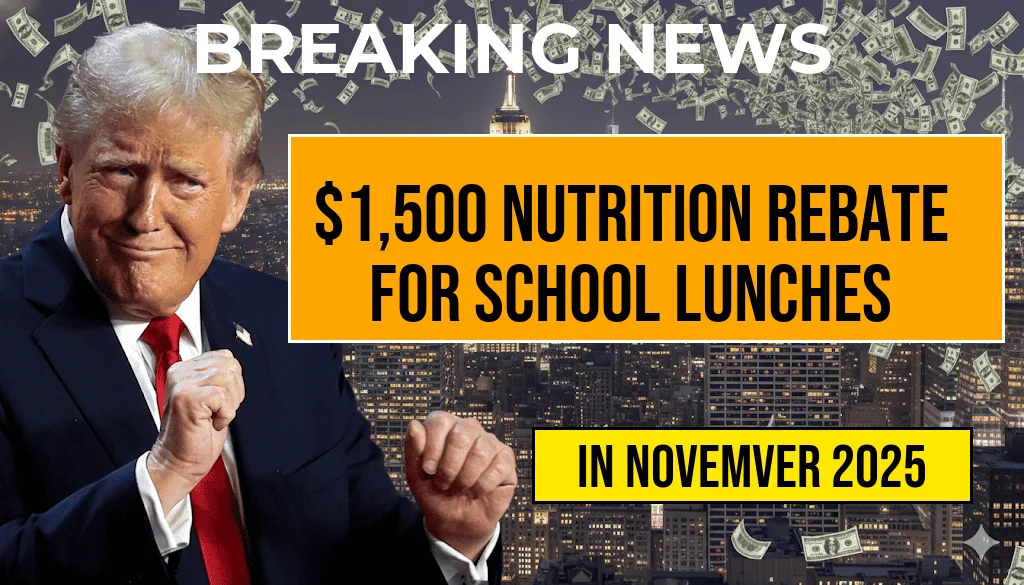
$1,500 Child Health Nutrition Rebate for School Lunch Programs
Have you been struggling to afford healthy meals for your children in school? You’re not alone. Many American families find the costs of nutritious school lunches to be an overwhelming expense, which makes the recent announcement regarding a $1,500 nutrition rebate particularly relevant. This initiative aims to support families while encouraging healthy eating among children. Let’s dive into what you need to know about this program.
What is the $1,500 Nutrition Rebate?
The $1,500 per child aid is part of the federal government’s enhanced efforts to improve child nutrition through school lunch programs. It’s designed to provide financial support to families that are struggling to keep up with meal costs. Under this program, families will be able to claim a rebate that can be used specifically for school meals. Many households might be shocked at this generosity, but here’s the catch: it’s only available if you file for it correctly.
This rebate can be a game-changer, especially for lower-income families. According to the latest statistics from the U.S. Department of Agriculture, approximately 12 million children rely on reduced-price or free meals through school lunch programs. That is a significant number and indicates that the demand for support is real. But many are still unaware of how to claim this benefit.
Who is Eligible for the Rebate?
- Families with children enrolled in public schools
- Households earning below the median income level
- Those who participate in other government assistance programs
If your household fits these criteria, you could be eligible for support, but naturally, many people may feel unsure or overwhelmed when navigating government programs. But don’t worry, there’s guidance available.
How to Claim the $1,500 Rebate
Claiming the $1,500 nutrition rebate USA isn’t as daunting as it seems, if you know what to do. The typical process involves a few simple steps:
| Step | Description |
| 1 | Check eligibility based on household income and child enrollment in school. |
| 2 | Gather necessary documents, like proof of income and school enrollment. |
| 3 | Apply online through your state’s Department of Education website. |
| 4 | Wait for processing, which can take anywhere from a few days to a couple of weeks. |
So, maybe it sounds straightforward, but it can still feel like jumping through hoops. Just remember, submitting all of the required paperwork is essential. Parents who miss out on the rebate often do so because they didn’t have the right documents handy. It’s good to be overly prepared.
The Impact of the Nutrition Rebate on Families
The school lunch program benefit USA is not just about filling plates; it’s about nurturing healthy lifestyles. As the government school food program USA increases its benefits, we should consider the implications: families now have better access to balanced nutrition, which is essential for growth and development. Numerous studies have shown that when children eat healthier meals, they perform better academically. That’s a win-win situation.
The student meal subsidy USA has the potential to alleviate significant financial strain for working parents—especially for those juggling multiple jobs. Research from the Food Research and Action Center indicates that proper nutrition can lead to improved behavior and learning outcomes in children. So, while some may think of this as just a financial aid program, its impact runs much deeper.
Community Reception and Future Prospects
The reception among experts and community leaders has been generally positive. Many advocate for nutrition as a critical part of education policies, so seeing education nutrition policy USA shift towards supporting families has garnered applause. However, skepticism does linger regarding the long-term sustainability of these programs. Can they be maintained as budgets tighten? It’s a tough balancing act, one that policymakers need to navigate carefully to ensure that the benefits continue flowing smoothly.
| Year | Funding for School Lunch Programs | Projected Number of Beneficiaries |
| 2020 | $12 billion | 30 million |
| 2021 | $15 billion | 35 million |
| 2022 | $17 billion | 40 million |
It’s astounding to see how funding has increased over the years, with expectations that even more families will benefit from these initiatives as awareness grows. But while those numbers look impressive, the reality is often a bit murkier—problems with delivery and accessibility still blight the system.
How You Can Advocate for Change
Moreover, sharing your success stories can inspire others to tap into the family welfare refund USA options available, shining light on a path others might find difficult to see. Many families are not aware of these benefits, and it often just takes one person speaking out to change that.
The Bottom Line on Nutrition Support
Frequently Asked Questions
What is the $1,500 Child Health Nutrition Rebate?
The $1,500 Child Health Nutrition Rebate is a financial incentive aimed at enhancing school lunch programs to ensure better nutrition for children.
Who is eligible for the rebate?
The rebate is designed for schools participating in the school lunch programs and may also extend to families who meet certain income criteria.
How can schools apply for the rebate?
Schools can apply for the rebate by submitting an application through their respective education department or program management office.
What can the rebate funds be used for?
The funds from the rebate can be used to improve food quality, provide healthier meal options, and enhance nutritional education programs in schools.
Is there a deadline to apply for the rebate?
Yes, schools must apply for the rebate before the specified deadline, which is typically outlined in the official program guidelines.

Kensley is a seasoned journalist with over a decade of experience in investigative reporting and feature writing. With a keen eye for detail and a relentless curiosity, she has covered a wide range of topics, from politics and social issues to environmental challenges and cultural trends. Her work has been featured in numerous reputable publications, where she is known for her ability to uncover compelling stories that resonate with audiences. Kensley believes in the power of journalism to inform and inspire, and she approaches each assignment with professionalism and integrity, ensuring that every piece is thoroughly researched and fact-checked.
Kensley’s dedication to her craft is matched only by her commitment to fostering trust between media and the public. She regularly engages with her readers through various platforms, encouraging dialogue and feedback to better serve their interests. Her passion for storytelling goes beyond mere reporting; she aims to give a voice to those often overlooked in mainstream discourse. Whether she is delving into complex issues or highlighting everyday heroes, Kensley’s writing reflects her belief in the importance of transparency and accountability in today’s rapidly changing world.